



 Career Guidance
examuttoron.com
|
EXAM UTTORON
Link:
https://examuttoron.com/how-to-become-an-embedded-systems-and-iot-hardware-engineer-guide
How to Become an Embedded Systems and IoT Hardware Engineer: Roadmap, Skills, Colleges and Salary 2026
What is an Embedded Systems and IoT Hardware Engineer?
An Embedded Systems and IoT (Internet of Things) Hardware Engineer is a specialized technology professional who designs, builds, and programs physical electronic circuits and connected smart devices. From smart electric vehicles (EVs), medical pacemakers, and industrial robots to home smart meters and aerospace avionics, embedded engineers make hardware talk to software.
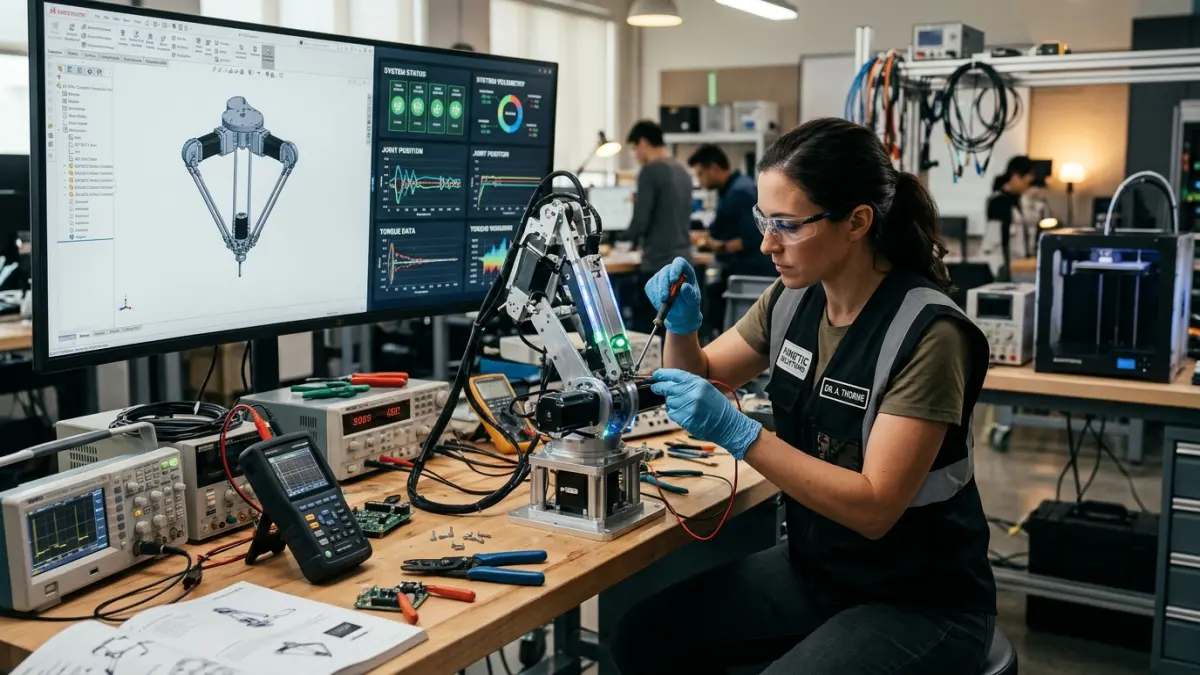
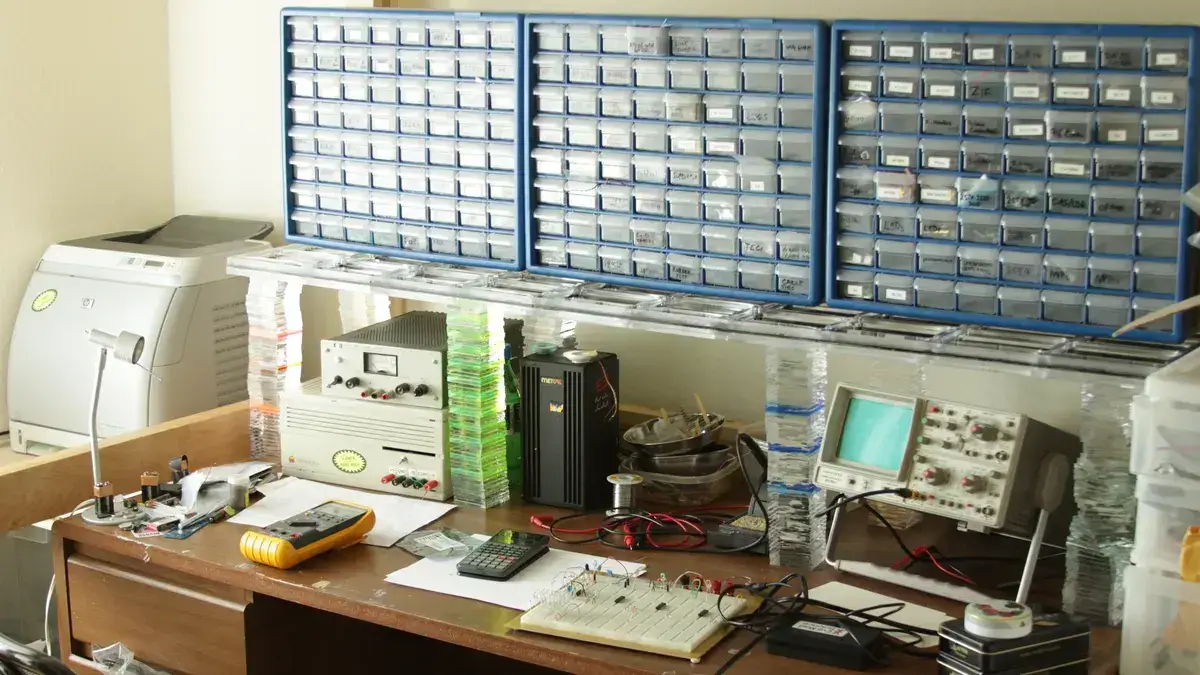
Unlike pure software programmers who work solely in web browsers or mobile apps, embedded hardware engineers sit at testing benches with microcontrollers, oscilloscopes, sensors, and circuit boards. They write efficient firmware code in Embedded C/C++ that controls motors, reads sensors, and communicates securely across wireless networks.
Why AI Cannot Replace This Career
Generative AI can write simple software routines, but it cannot hold a soldering iron, probe a malfunctioning PCB trace with an oscilloscope, diagnose power surges caused by faulty capacitors, or test physical sensor antennas in electromagnetic interference chambers. Designing physical hardware products that run reliably inside cars, planes, and hospital gear requires hands-on electrical problem solving that software models cannot physically perform.
1. Quick Facts at a Glance
| Key Parameter | Details |
|---|---|
| Minimum Eligibility | Class 12 Pass with Science (Physics, Chemistry, and Mathematics - PCM) with at least 50% to 60% marks |
| Primary Degree | B.Tech / B.E. in Electronics & Communication Engineering (ECE), Electrical Engineering (EE), or Computer Science with Embedded Systems specialization (4 Years) |
| Alternative Route | Diploma in Electronics Engineering (3 Years) with Lateral Entry into 2nd year B.Tech |
| Primary Entrance Exams | JEE Main, JEE Advanced, WBJEE (West Bengal), MHT CET, BITSAT, COMEDK |
| Government College Fees | ₹1.5 Lakh to ₹5 Lakh total for entire 4-year B.Tech |
| Private College Fees | ₹4 Lakh to ₹12 Lakh total |
| Starting Salary (Fresher) | ₹4.5 Lakh to ₹9 Lakh per year (₹35,000 to ₹70,000 per month) |
| Senior Systems Architect Salary | ₹18 Lakh to ₹38+ Lakh per year (₹1,40,000 to ₹3,00,000+ per month) |
| Top Employers | Texas Instruments, Qualcomm, Intel, Bosch, Tata Motors (EV Division), Ather Energy, NXP Semiconductors, Honeywell |
2. What an Embedded Systems Engineer Actually Does
An embedded hardware and IoT engineer is responsible for:
- Microcontroller Programming: Writing lean firmware in Embedded C and C++ for microcontrollers like ARM Cortex, STM32, ESP32, and PIC.
- PCB Schematic and Layout Design: Designing multi-layer printed circuit boards using industry software such as Altium Designer, KiCad, or Eagle.
- Hardware Testing & Debugging: Connecting logic analyzers, multimeters, and oscilloscopes to measure voltage drops, signal reflections, and clock pulses.
- IoT Protocol Implementation: Integrating wireless communication stacks including BLE, Zigbee, LoRaWAN, Wi-Fi, and MQTT for cloud connectivity.
- Power Optimization: Tuning sleep and awake modes so battery-powered IoT devices can run uninterrupted in field environments for years.
3. Step-by-Step Educational Roadmap
Step 1: Excel in Class 12 with Physics, Chemistry, and Mathematics
Build strong conceptual fundamentals in electromagnetism, semiconductors, alternating current, and Boolean logic during Class 11 and 12.
Step 2: Clear Engineering Entrance Exams
Target national and state-level engineering entrance exams:
- JEE Main & Advanced: For admissions to IITs, NITs, and IIITs.
- WBJEE: For admission to premier state institutions like Jadavpur University and Kalyani Government Engineering College.
- State & Private CETs: Such as MHT CET, BITSAT, and VITEEE.
Step 3: Pursue B.Tech in ECE, EEE, or Mechatronics
Master subjects including Digital Electronics, Microprocessors & Microcontrollers, Signals & Systems, VLSI Design, and Real-Time Operating Systems (FreeRTOS).
Step 4: Build Real Physical Projects During College
Do not rely solely on textbooks. Buy development boards (ESP32, Raspberry Pi Pico, Arduino, STM32 Nucleo) and build working prototypes like smart weather monitors, robotic drive systems, and IoT home energy tracking devices.
Step 5: Gain Industry Certifications and Enter the Job Market
Take up specialized training in ARM architecture, Embedded Linux, or PCB design through platforms like CDAC, NPTEL, or certified industrial training centers to secure core engineering placements.
4. Top Colleges and Official Website Links
| Institute Name | Location | Type | Official Website Link |
|---|---|---|---|
| Indian Institute of Technology (IIT) Kharagpur | Kharagpur, West Bengal | Institute of National Importance | iitkgp.ac.in |
| Jadavpur University (Faculty of Engineering & Technology) | Kolkata, West Bengal | State University | jaduniv.edu.in |
| National Institute of Technology (NIT) Tiruchirappalli | Tiruchirappalli, Tamil Nadu | Central Government | nitt.edu |
| BITS Pilani | Pilani, Rajasthan | Private Deemed | bits-pilani.ac.in |
| IIIT Hyderabad | Hyderabad, Telangana | Autonomous Institute | iiit.ac.in |
| Indian Institute of Engineering Science and Technology (IIEST Shibpur) | Howrah, West Bengal | Institute of National Importance | iiests.ac.in |
5. Salary Growth and Earning Potential
| Career Level | Experience Range | Average Monthly Pay | Annual CTC |
|---|---|---|---|
| Junior Embedded / Firmware Engineer | 0 to 2 Years | ₹35,000 to ₹70,000 | ₹4.2 Lakh to ₹8.5 Lakh |
| Senior Embedded Systems Engineer | 3 to 7 Years | ₹80,000 to ₹1,60,000 | ₹9.6 Lakh to ₹19 Lakh |
| Principal Hardware Architect / IoT Lead | 8+ Years | ₹1,80,000 to ₹3,50,000+ | ₹22 Lakh to ₹42+ Lakh |
6. Honest Reality Check: Pros and Cons
| Advantages (Pros) | Challenges (Cons) |
|---|---|
| Immunity against purely digital software automation because physical hardware creation is required | Steeper learning curve requiring both electronic hardware and low-level software skills |
| Massive market boom driven by Electric Vehicles (EVs), renewable energy, and industrial automation | Hardware mistakes cost money: fabricating a bad PCB requires re-manufacturing delays |
| High respect and premium pay scales in semiconductor and automotive multinational firms | Requires investment in bench instruments (microcontrollers, programmers, multimeters) during learning |
| Direct path to start deep-tech hardware startups in robotics, agriculture tech, and smart energy | Fresher recruitment can be competitive outside top-tier engineering campuses |
7. Frequently Asked Questions (FAQ)
Which programming languages are most important for embedded systems?
Embedded C and C++ are the industry standards for microcontroller firmware due to their raw execution speed and direct memory access. Python is widely used for IoT cloud scripting, test automation, and device simulators.
Is a Computer Science degree better or an ECE degree for this career?
An Electronics and Communication Engineering (ECE) or Electrical Engineering degree is generally preferred because embedded engineering requires deep knowledge of circuits, voltage levels, semiconductors, and microprocessors. Computer Science graduates can also enter this domain by learning hardware architecture and microcontrollers.
What is the difference between IoT and Embedded Systems?
An embedded system is a dedicated computer hardware unit designed to perform one specific function (like a microwave control board or an ABS brake controller). An IoT system connects that embedded hardware to the internet or local networks so it can send sensor data and receive remote commands.